
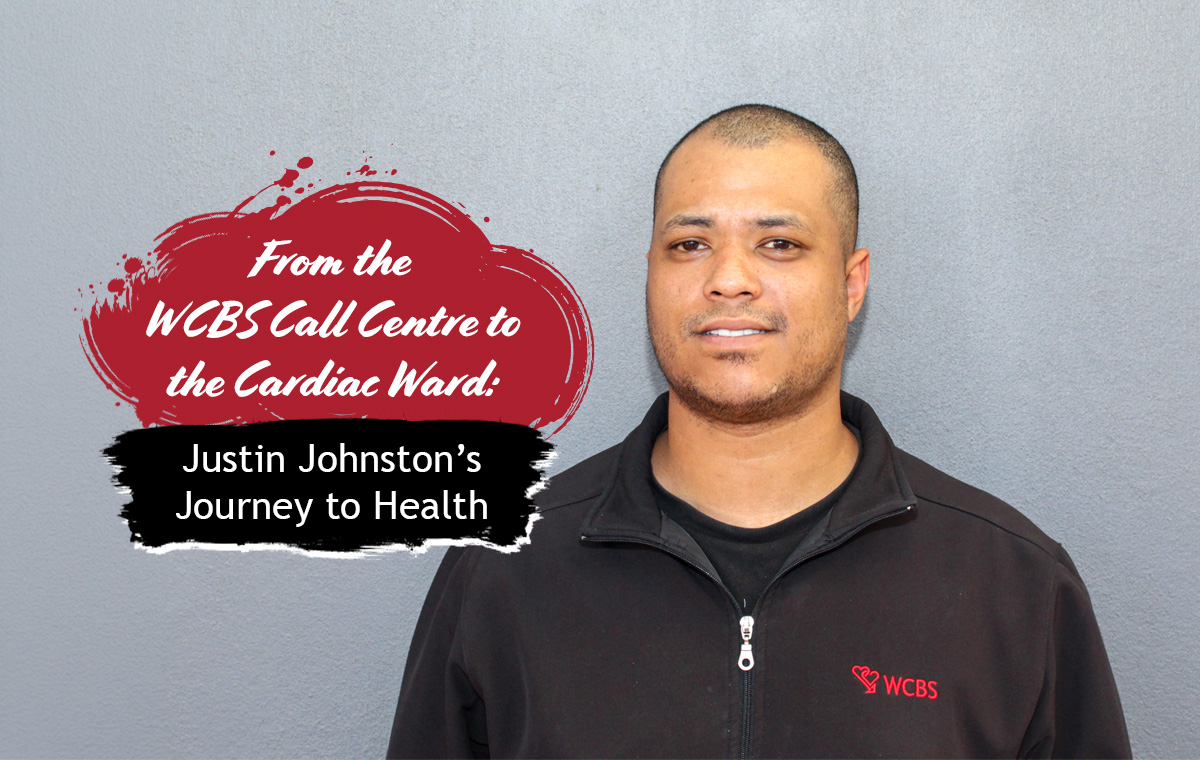
When Justin Johnston started working as a Customer Service Officer at the Western Cape Blood Service (WCBS), he never imagined that one day, he would be on the receiving end of the very blood he encouraged others to donate.
At the end of 2023, Justin had been with WCBS for a few months, when he started experiencing dizzy spells. A visit to his GP revealed that he had dangerously high blood pressure. He was prescribed medication for a month but at his follow-up appointment in January 2024, his blood pressure was still alarmingly high. His doctor increased the dosage, extended the medication for another three months, and referred him to a specialist GP to investigate why a seemingly healthy 29-year-old had developed such high blood pressure.
Over the next few months, Justin underwent a series of tests to determine the underlying cause. Was it genetic or was there another underlying reason this was occurring? At every follow-up appointment, doctors ran more tests, but each came back normal, leaving them without answers.
Then, in March this year, everything changed.
Justin had spent the day with colleagues at a blood grouping exhibition and felt completely well. However, while driving home, shortly after lifting heavy equipment from his car, he suddenly began feeling unwell. Pain spread down the left side of his body, affecting his neck, shoulder, arm, hand and leg. By the time he arrived home, he was dizzy, sweating profusely and in severe pain.
Fortunately, Justin’s girlfriend, a paramedic, immediately knew that something was seriously wrong. When she checked his pulse, she was shocked to find his heart rate was 230 beats per minute. She rushed him to Melomed Hospital in Tokai where doctors found his blood pressure had climbed to 185/130. He was admitted to hospital and placed on an ECG to monitor his heart for 24 hours.
Under the care of his cardiologist, further investigations revealed the cause of Justin’s health problems and the diagnosis was both surprising and frightening.
Justin was born with only two valves in his aortic valve instead of the normal three, a congenital condition known as a bicuspid aortic valve, and one of those valves was leaking. His heart had been forced to work much harder than it should have his entire life. Doctors also discovered a blockage in his main artery that was responsible for his persistently high blood pressure. By this stage, his heart had become severely enlarged, and he urgently needed two major heart procedures.
The first operation involved inserting a stent to open the blocked artery. After recovering at home for three weeks, Justin returned to hospital for open-heart surgery to repair the leaking valve.
The wait for the second operation was an anxious time for Justin and his family. “It’s scary,” says Justin. “You know surgery will help you, but there’s always that fear because it’s still major heart surgery.”
When he woke up after the operation, he was surrounded by wires, tubes and monitoring equipment. But one of the first things that caught his eye was a Western Cape Blood Service hamper next to his bed. “In that moment,” Justin recalls, “I thought, thank you to all my colleagues who work so hard to remind blood donors when it’s time to donate again.”
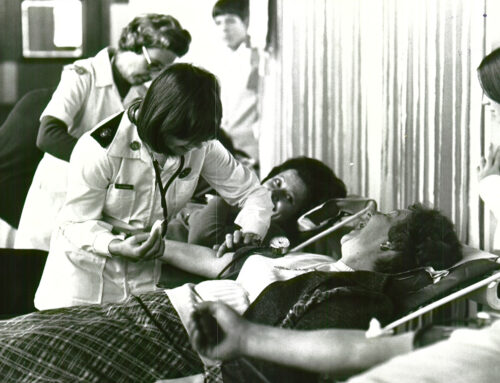
The blood that Justin received during his surgery was available because of the generosity of blood donors. Every donation plays a vital role in ensuring patients like Justin can recover from medical emergencies. Justin has been recovering at home and is looking forward to returning to work in September, this time with an even deeper appreciation for the lifesaving impact of every blood donation. His story is a powerful reminder that every unit of blood can make all the difference.