
When a donor gives blood, their donation is only the beginning of a carefully controlled journey. At the Western Cape Blood Service, every blood donation is processed, tested and separated into blood components before it can be made available to patients. Behind the scenes, specialised laboratory equipment and highly trained professionals work together to ensure that every donation is safely prepared for those who need it.
Behind the doors of the Western Cape Blood Service, away from the donor chairs and blood donation clinics, another world gets to work. It is a world of laboratories, carefully controlled temperatures, highly trained professionals and some seriously impressive technology. Every donation must be carefully processed and tested before blood products can be made available for patients. So, while our donors are the heroes who start the journey, there is an extraordinary team working behind the scenes.
And some members of that team happen to be machines.
First Stop: The Centrifuge
Once blood has been collected, samples from the donation are sent for testing, while the donated unit begins its processing journey.
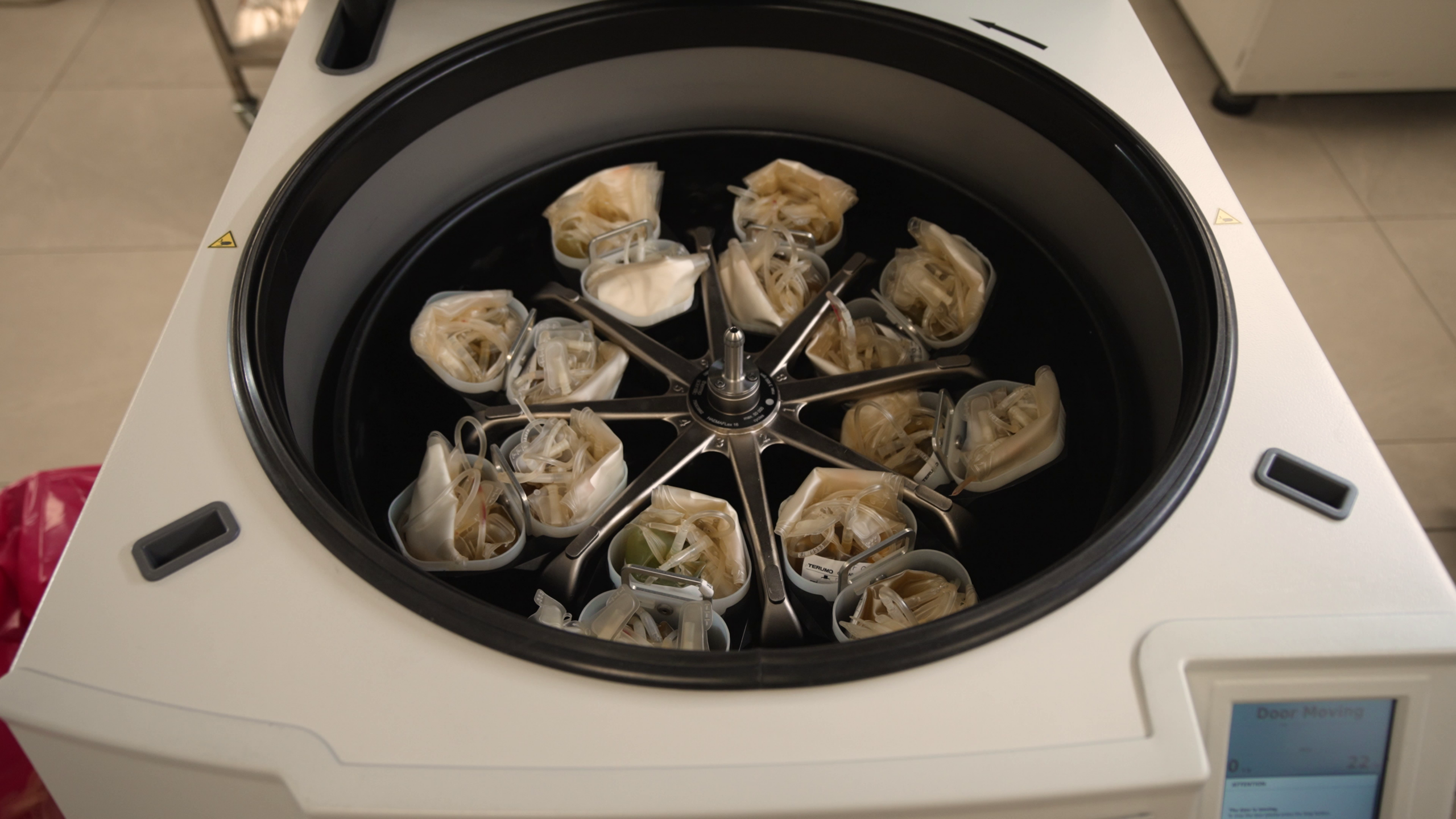
One of the most important pieces of equipment in this process is the centrifuge.
A centrifuge works by spinning blood at very high speeds. The different components of blood have different densities, the spinning action allows them to form distinct layers, preparing them for separation and further processing.
It may look like a machine simply going for a very fast spin, but what is happening inside is an important part of turning one blood donation into life-saving blood components.
And that brings us to our next machine.
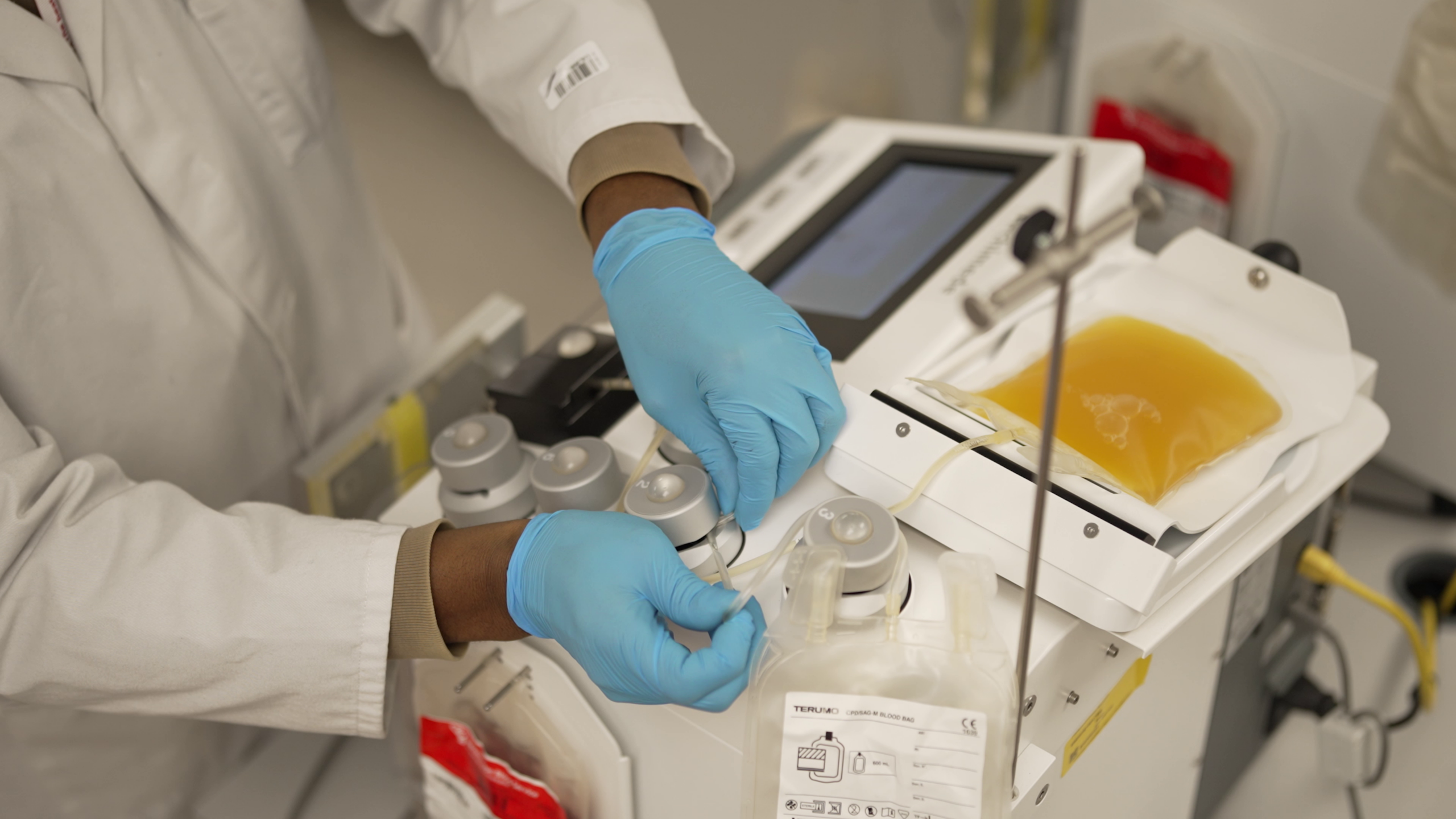
The Component Extractor: One donation, different possibilities
After centrifugation has created the different layers, the component extractor helps separate the donated blood into its individual components. These include red blood cells, platelets and plasma.
This separation is important because patients do not always require whole blood. One patient may need red blood cells, another may require platelets, while another may need a plasma product. By separating blood into components, a single donation has the potential to support the treatment of more than one patient. That is when you begin to realise that a bag of donated blood is not simply a bag of blood. It is possibility waiting to be separated.
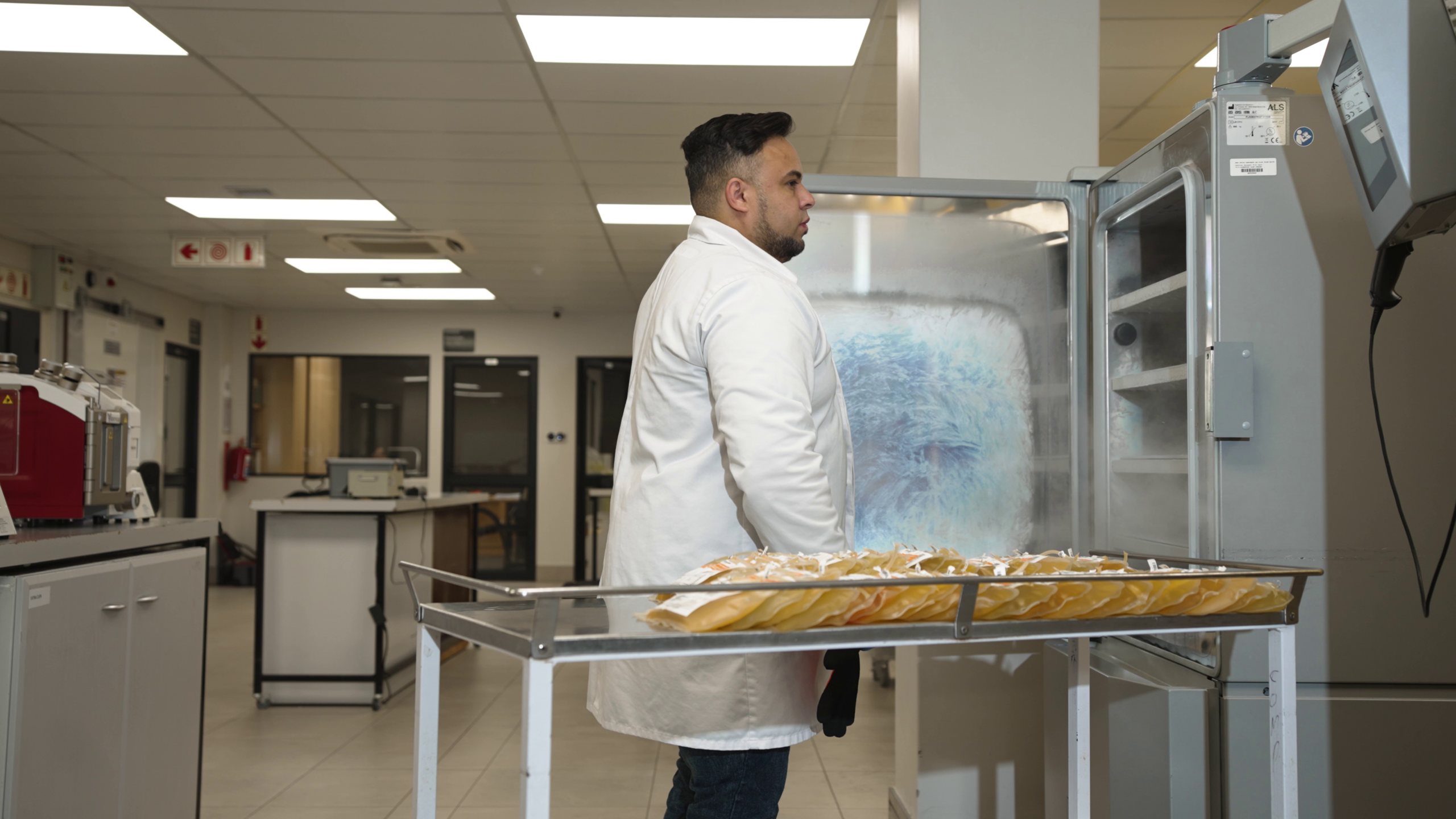
Meet the Snap Freezer
Next up is one of the coolest members of the team, quite literally.
The snap freezer rapidly freezes plasma. Plasma contains important proteins, including clotting factors. Rapid freezing and storage at the correct temperature help preserve these valuable components until the plasma is required for further processing or patient use. Temperature control is therefore not simply about keeping something cold. It is about maintaining the quality and clinical value of a precious blood product. This little intelligent machine may not make much noise about its contribution, but it has one very important job: Freeze it fast. Preserve what matters.
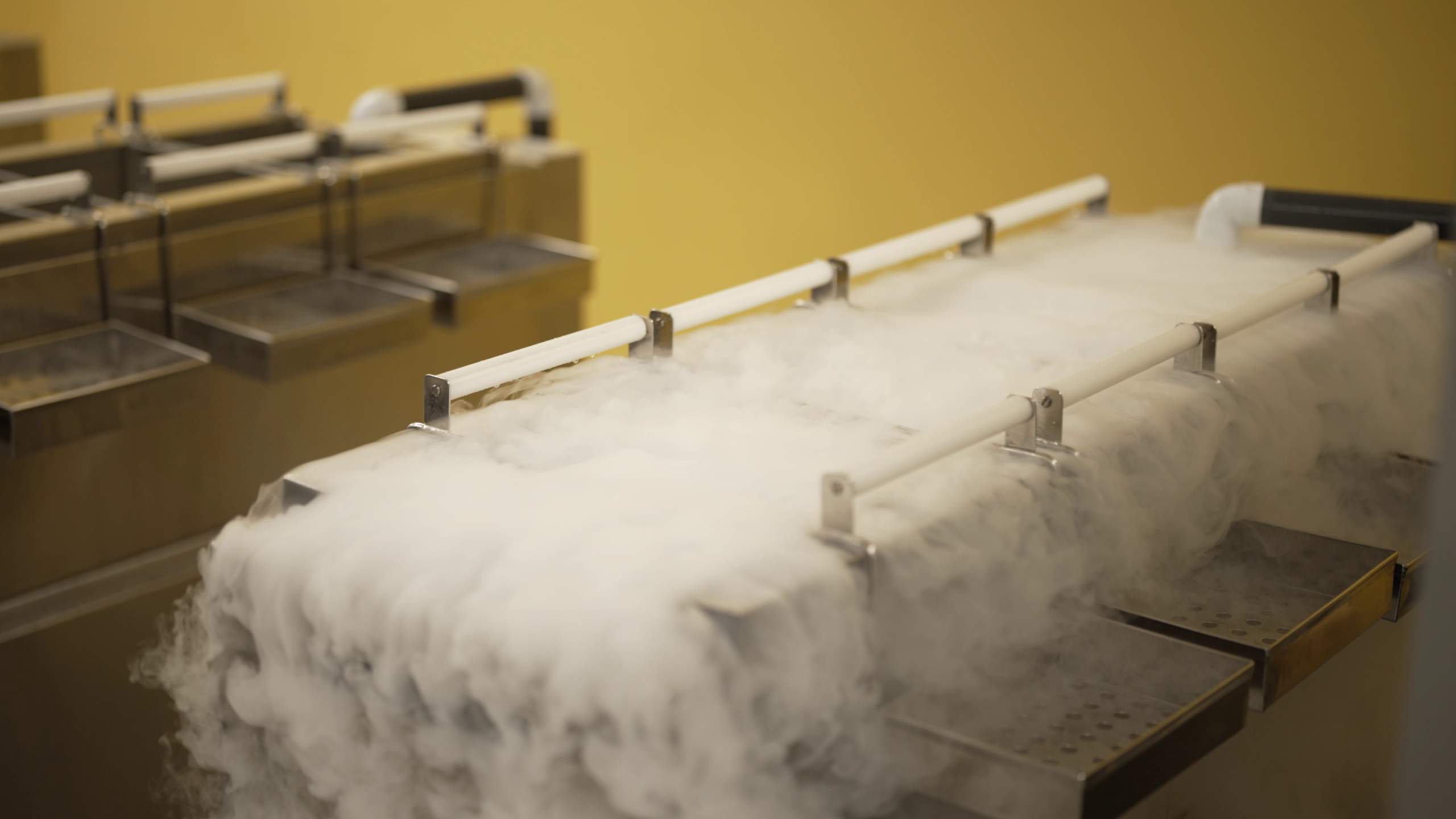
The Thawing Machine: Brings plasma back to life
Of course, what is frozen will eventually need to be thawed.
Enter the plasma thawing machine.
Plasma must be thawed under carefully controlled conditions to protect the integrity of the product. Depending on how plasma is being processed, thawing can also form part of the preparation of additional plasma-derived components. For example, controlled thawing can be used during the preparation of cryoprecipitate, a plasma component rich in proteins involved in blood clotting, including fibrinogen, factor VIII, factor XIII and von Willebrand factor. So even after plasma has been separated and frozen, there may still be more potential waiting inside it.
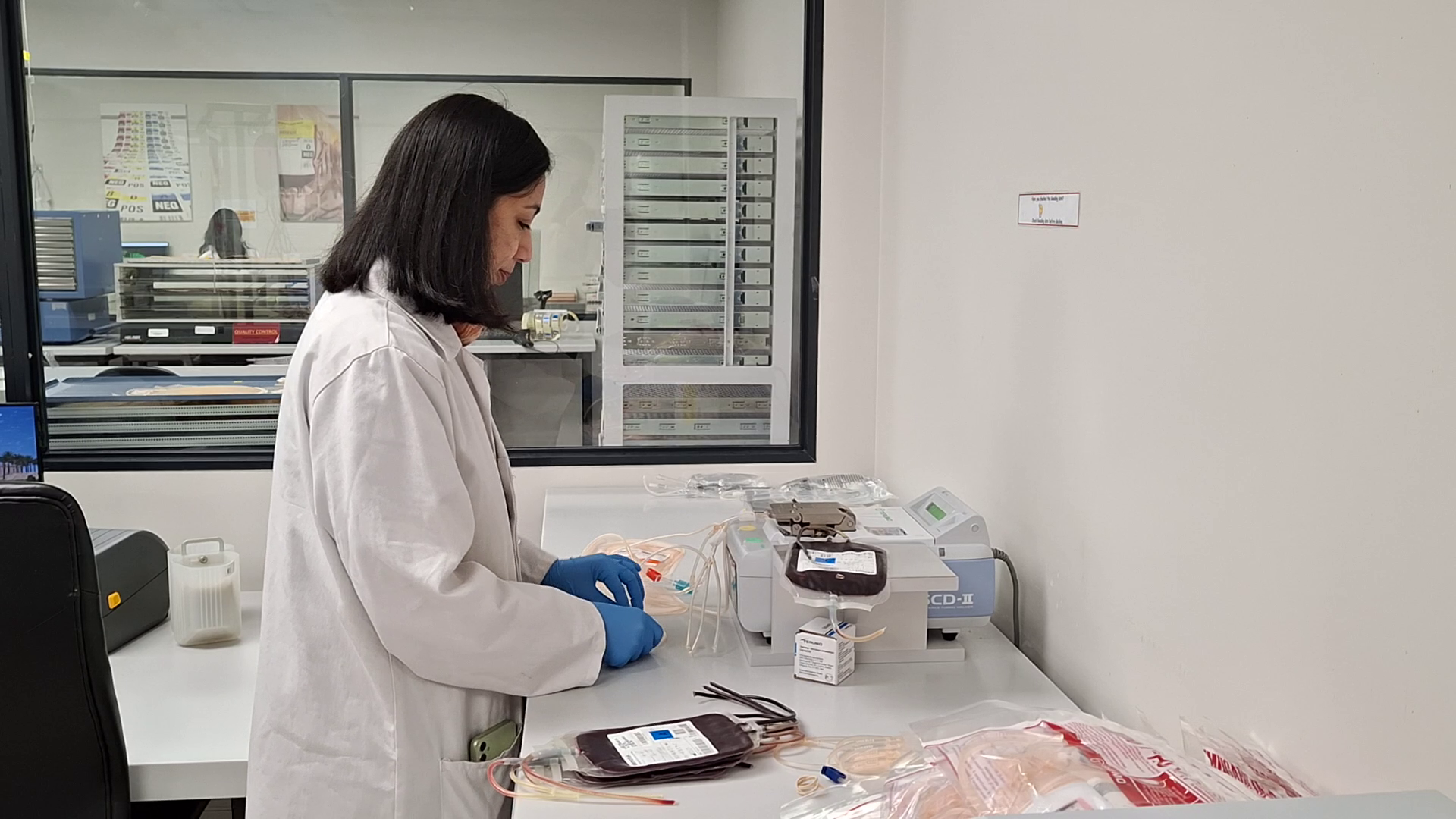
The Decapper: Small machine, big task
Before samples can move through certain laboratory testing processes, there is another machine waiting for them: the pre-analytical analyser, commonly referred to as the decapper. Its job may sound simple, but in a high-volume laboratory, automation matters. The machine prepares sample tubes for testing, including safely removing their caps so that the samples can proceed to the appropriate laboratory analysers. The samples can then undergo different types of testing, including testing for markers of transfusion-transmissible infections and blood-group antibodies. These tests are looking for different things.
Molecular testing, such as nucleic acid testing, looks for the genetic material of certain viruses. Depending on the virus, this may be DNA or RNA. This technology can help identify evidence of infection even when the amount of virus present is very small. Serological and antibody testing, on the other hand, looks for specific antigens or antibodies. In blood-group testing, antibody screening is particularly important because certain antibodies can react with antigens on red blood cells and may cause complications during transfusion. Different tests. Different technologies. One shared purpose: helping ensure that blood supplied for transfusion meets stringent safety requirements.
700 – 800 samples daily
Now imagine this process happening not once, not ten times, but hundreds of times.
On a busy day, approximately 700 to 800 samples can move through these laboratory processes. Every tube represents a donor who gave up their time. Every sample is connected to a blood donation. And ultimately, every successful process brings us closer to a patient waiting somewhere in the Western Cape.
Keeping this operation running is no small undertaking. Sophisticated laboratory and blood-processing equipment is expensive to operate. Beyond the initial cost of the machines themselves, there are ongoing expenses associated with specialised consumables, reagents, electricity, temperature-controlled environments, calibration, quality-control procedures, preventative maintenance and servicing. These machines cannot simply be switched on and forgotten, they need to be monitored, maintained, calibrated and serviced regularly. They need to remain in top form because, in blood banking, reliability is not a luxury.
So, day after day, donation after donation, these remarkable machines quietly perform the work that keeps the journey of blood moving. No applause. No spotlight. Just precision, technology and purpose working behind the scenes to help keep a safe blood supply flowing.
They are more than machines. They are the machinery behind the mission.