
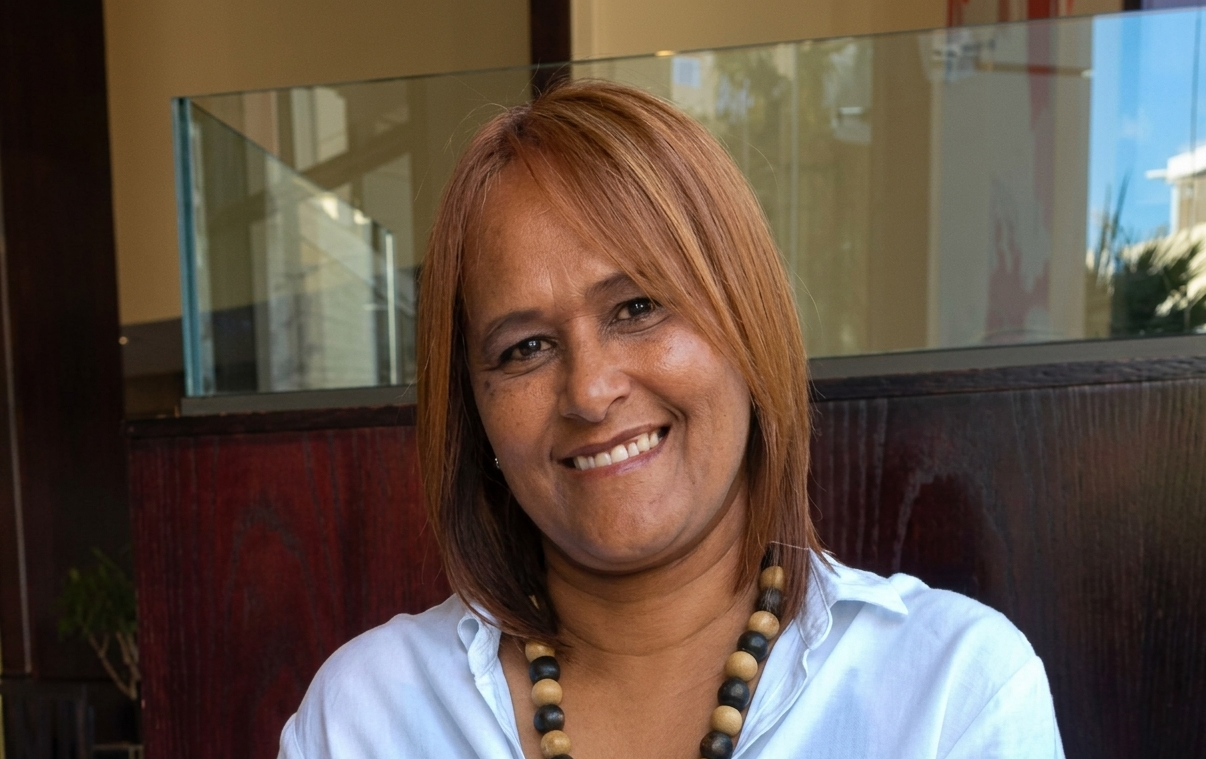
For 27 years, I have been the one standing at the bedside caring for others, offering comfort, and supporting my patients as a professional nurse in a psychiatric hospital. Caring for people has always been part of who I am.
Beyond my work, I am a proud mother of three incredible daughters. My oldest is 35, my middle daughter is 27, and my youngest is 14. They are my greatest joy, my constant motivation, and my anchor through every season of life.
In 2020, my life took an unexpected turn. It began quietly, with a deep and persistent exhaustion. At first, I brushed it off as study stress, something I had managed many times before. But this felt different. It wasn’t just tiredness; it was a heaviness I couldn’t shake. One day at work, I decided to get a random haemoglobin (HB) test. The result came back at 10 – lower than normal, but not alarming. Like many healthcare professionals, I thought I could manage it myself. I bought iron supplements, adjusted my diet, and carried on with my routine.
But things didn’t improve. Instead, my energy continued to decline. When my haemoglobin dropped further to 8, I knew I could no longer ignore it. I saw a gynaecologist, who suggested that my menstrual cycle might be contributing to the issue. After assessments and discussions, I was advised to have a hysterectomy. As I prepared for surgery, my condition worsened. Before the operation, I required a blood transfusion and received two units of blood. I was told that my blood type B negative is quite rare, and that finding compatible blood could be a challenge.
That moment stayed with me. For the first time, I wasn’t the nurse reassuring someone else. I was the patient, vulnerable, uncertain, and dependent on beyond forces beyond my control.
But when the time came, blood was available for me. There was no delay. No complications. Someone, somewhere, had already given what I needed without knowing me, or my story.
I went on to have my hysterectomy, but my journey took a frightening turn when I admitted to the ICU. My bowels had shut down, and I needed a nasogastric tube inserted to drain my stomach. It was one of the most terrifying experiences of my life. After the blood transfusion, I felt the difference almost immediately. My energy improved, my strength returned, and I allowed myself to believe that the worst was behind me.
But it wasn’t. Three months later, I checked my haemoglobin again. It had dropped to 6. I remember telling my doctor I felt completely “out of sorts.” I was referred to a gastroenterologist, who recommended a colonoscopy.
That was when I received the diagnosis of colon cancer. Surgery was planned, and once again, I needed blood. This time, I received three more units. In total, over a period of six months, I received five units of B-negative blood.
Going through this journey changed me in ways I never expected. As a nurse, I always understood the importance of blood donation. But as a patient, I truly felt it. I now understand what it means to depend on the generosity of others, and carried through some of your darkest moments by people you will likely never meet.
I often think about the person who donated that blood. Someone, somewhere, took the time to give a part of themselves, not knowing who it would help or that it would save my life. Because of them, I am still here.
If I could meet my donor, I would simply say: Thank you!